Teen Acne 101: What’s Normal, What Helps, and When to Get Guidance
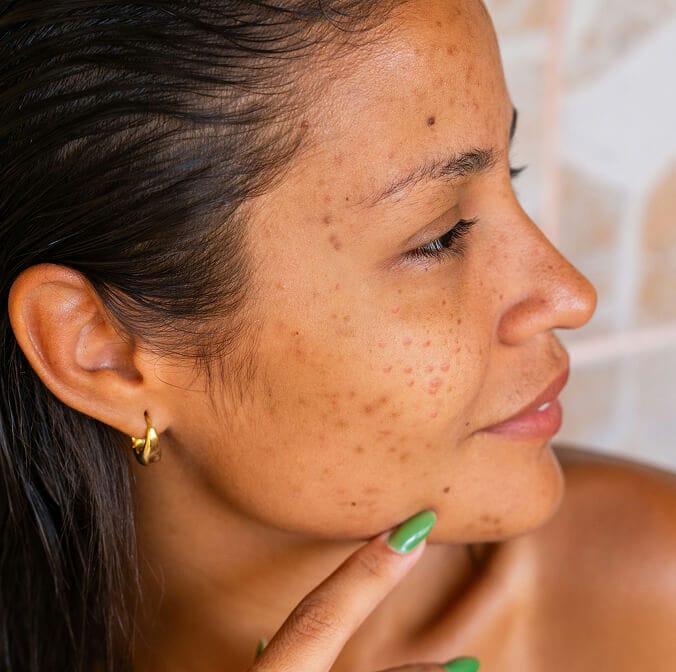
Here’s something most parents don’t expect: dermatologists are now seeing acne show up in kids as young as seven or eight. Puberty is starting earlier than it did a generation ago, and skin is often the first place that shows.
So if your teenager’s breakouts arrived sooner than you thought they should, or feel more persistent than you remember from your own adolescence, you’re not imagining it, and it isn’t a sign that something is wrong with them.
It also isn’t something to simply wait out, and it isn’t something that calls for panic. There’s a wide, calm middle ground between those two instincts, and that’s where this guide lives.
Why Teens Get Acne in the First Place
The short answer is hormones. As androgens rise during puberty, oil glands produce more sebum, pores clog more easily, and breakouts follow. Genetics play a role, too: if acne ran in your family, it’s more likely to show up in theirs. Stress can make it worse. And that earlier-puberty trend we mentioned above is very likely part of why so many parents are having this conversation sooner than they expected to.
One myth worth retiring here: greasy food isn’t really the villain it’s made out to be. The research points somewhere more specific: high-glycemic foods and certain dairy products, skim milk in particular, appear to have a stronger connection to breakouts than fries or chocolate ever did. It’s a small distinction, but it’s the accurate one.
Where Most Families Start: Two Mistakes That Make It Worse
Most people try one of two paths first. Either a drugstore aisle, trial and error with whatever’s on the shelf, or a dermatologist’s office, which can feel clinical and prescription-heavy for a concern that may not need that level of intervention yet. Neither path is wrong. But two habits tend to sabotage both of them, and they rarely make it into the conversation.
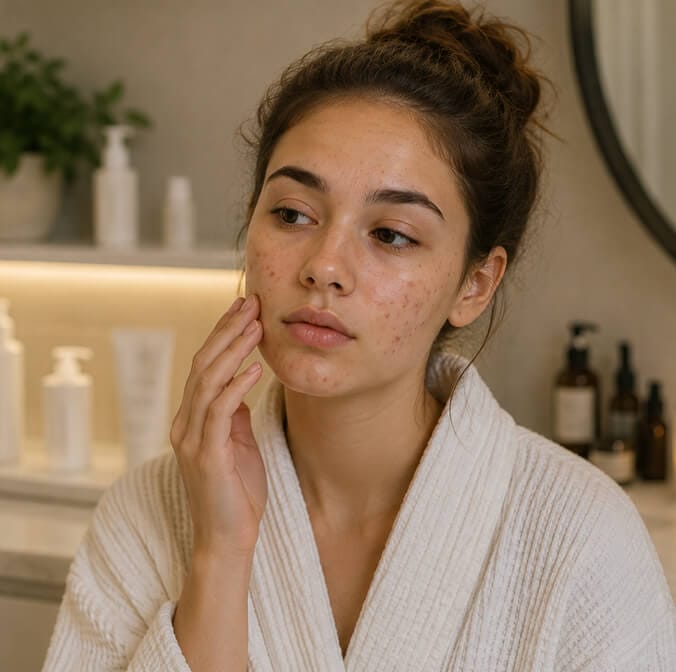
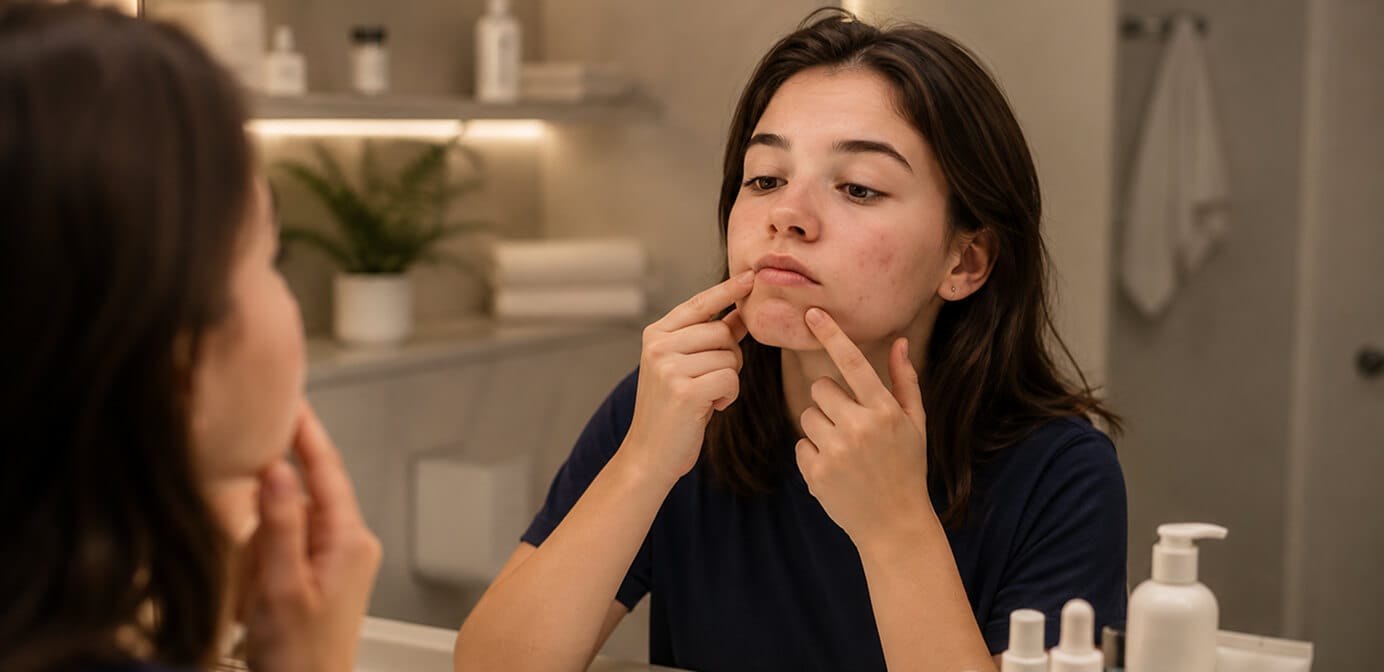
The first is over-washing. Dirty skin doesn’t cause acne, a stubborn myth that leads a lot of teens toward scrubbing their face raw, which only irritates the skin and can make breakouts worse, not better. The second is picking or popping. It feels productive in the moment. It isn’t. It increases inflammation and the odds of lasting scarring, which is the opposite of what anyone reaching for a blemish is trying to achieve.
And then there’s the timeline problem. Skin doesn’t clear in a week or two, no matter what a product label promises. Real improvement takes several weeks to a couple of months of consistency. Most routines get abandoned right around the point they would have started working, not because they failed, but because nobody warned the person trying them how long “working” actually takes.
A Different Kind of Accountability
Here’s the part that surprises most parents. Research shows that reminding a teenager, again and again, to use their acne treatment tends to backfire: teens who are nagged about it actually use it less consistently, not more. It’s not a discipline problem. It’s a relationship one.
What tends to work better is structure that comes from somewhere else entirely. Regular check-ins with a provider, not a parent, build the kind of accountability that actually sticks, in part because teens are more candid and more consistent when they get some one-on-one time with someone who isn’t Mom or Dad. It’s less about willpower and more about having a real plan, and someone besides family checking in on it.
That’s the idea behind a guided program in the first place: a scheduled relationship with a provider that replaces nagging with structure, built around your teen specifically rather than a one-size-fits-all product off a shelf.
What's Actually in the Program
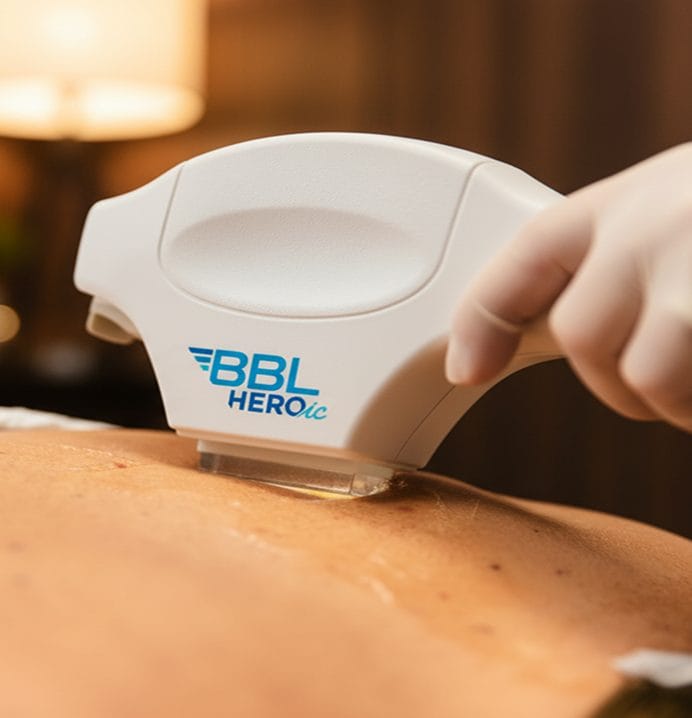
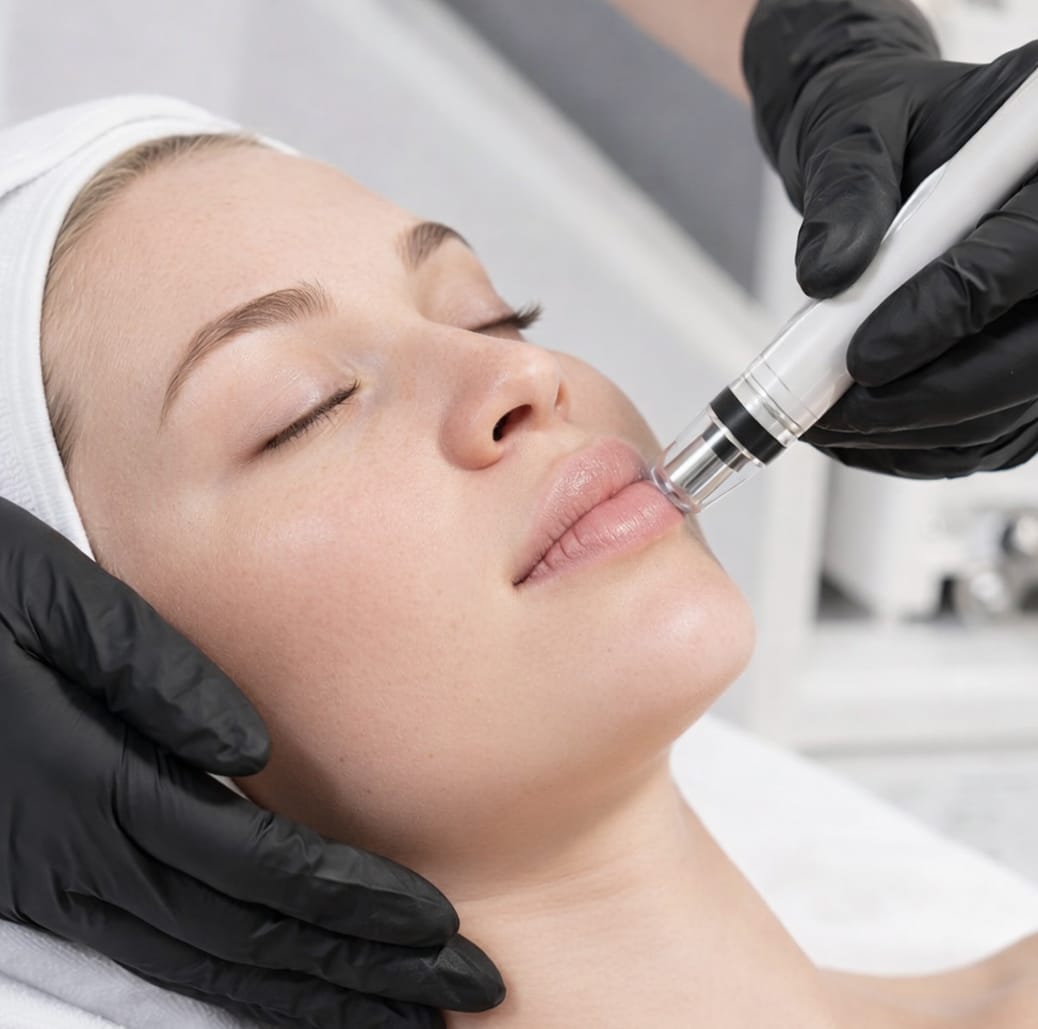
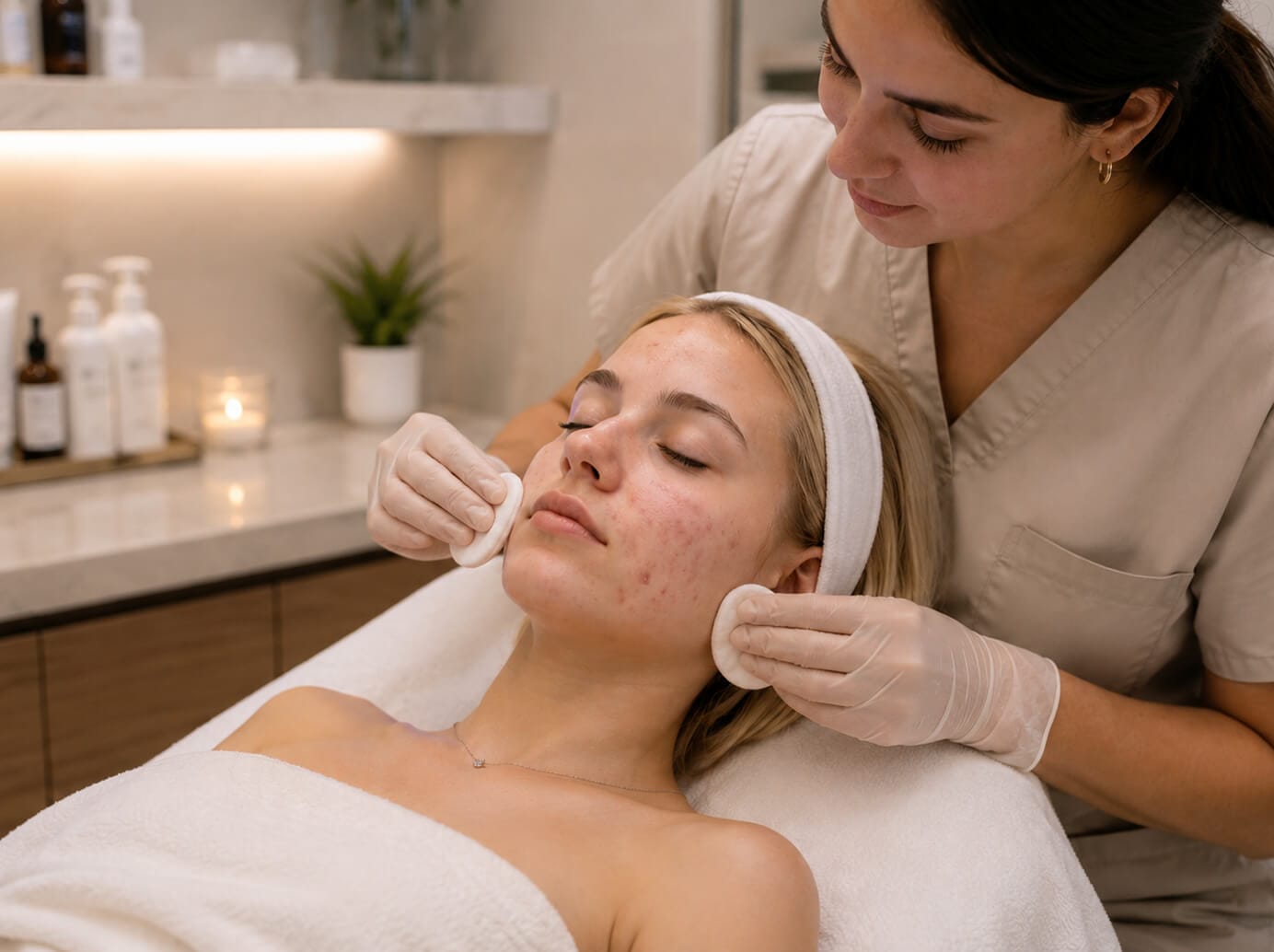
At Lumos, that structure starts with our introductory tier: a signature facial paired with medical-grade blue light therapy, shaped into a plan during a real consultation rather than guessed at from a product aisle. The science behind blue light is more precise than “it kills bacteria”: at a specific wavelength, around 415 nanometers, it triggers a reaction that targets the bacteria most responsible for acne, Cutibacterium acnes, at the source. Where a plan calls for more, ForeverClear, FDA-cleared for acne, can be layered in.
Every part of it is built with teen skin in mind: minimal to no downtime, nothing invasive. And in the spirit of transparency Lumos was built on, it’s worth saying plainly what this program is not: it isn’t designed for severe or cystic acne that needs prescription management or has already left scarring. That’s a different conversation, and knowing the difference up front is part of getting it right the first time.
Why Getting Ahead of It Matters
This isn’t only about appearance, even though it’s easy to assume that’s the whole story. The research is fairly consistent: the longer acne goes untreated, the higher the risk of anxiety tends to climb, and self-esteem measurably rises as skin clears.
The point isn’t to create urgency or insecurity where none needs to exist. It’s simply that addressing it sooner tends to matter for how a teen feels day to day, not just how their skin looks in a photo.
Making It Accessible for Families
Transparent pricing starts at $599, with Affirm and Cherry, and other reputable financing options available, all without hard credit checks. No hidden steps, no pressure to commit to more than what’s actually needed: just a clear starting point and a plan that can grow if it needs to.
The Next Step
Every teen’s skin tells a slightly different story, which is exactly why a real consultation, not a guess from a shelf, is where a plan should start. If your teen has been dealing with breakouts and you’re ready for guidance instead of trial and error, book a consult through the Acne Program to build a plan around what their skin actually needs.
That’s the whole idea behind Lumos: revealing the light that’s already there, one honest, guided step at a time.